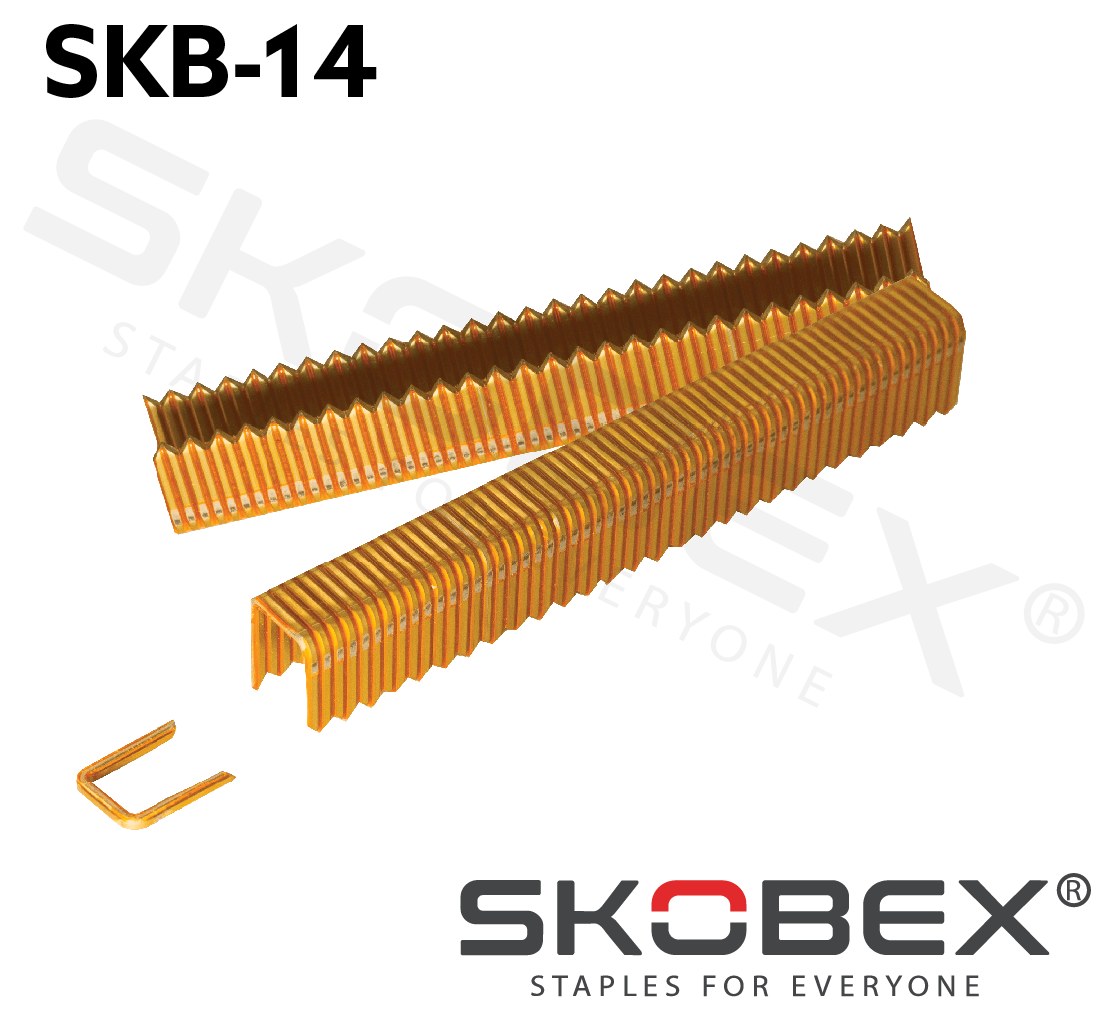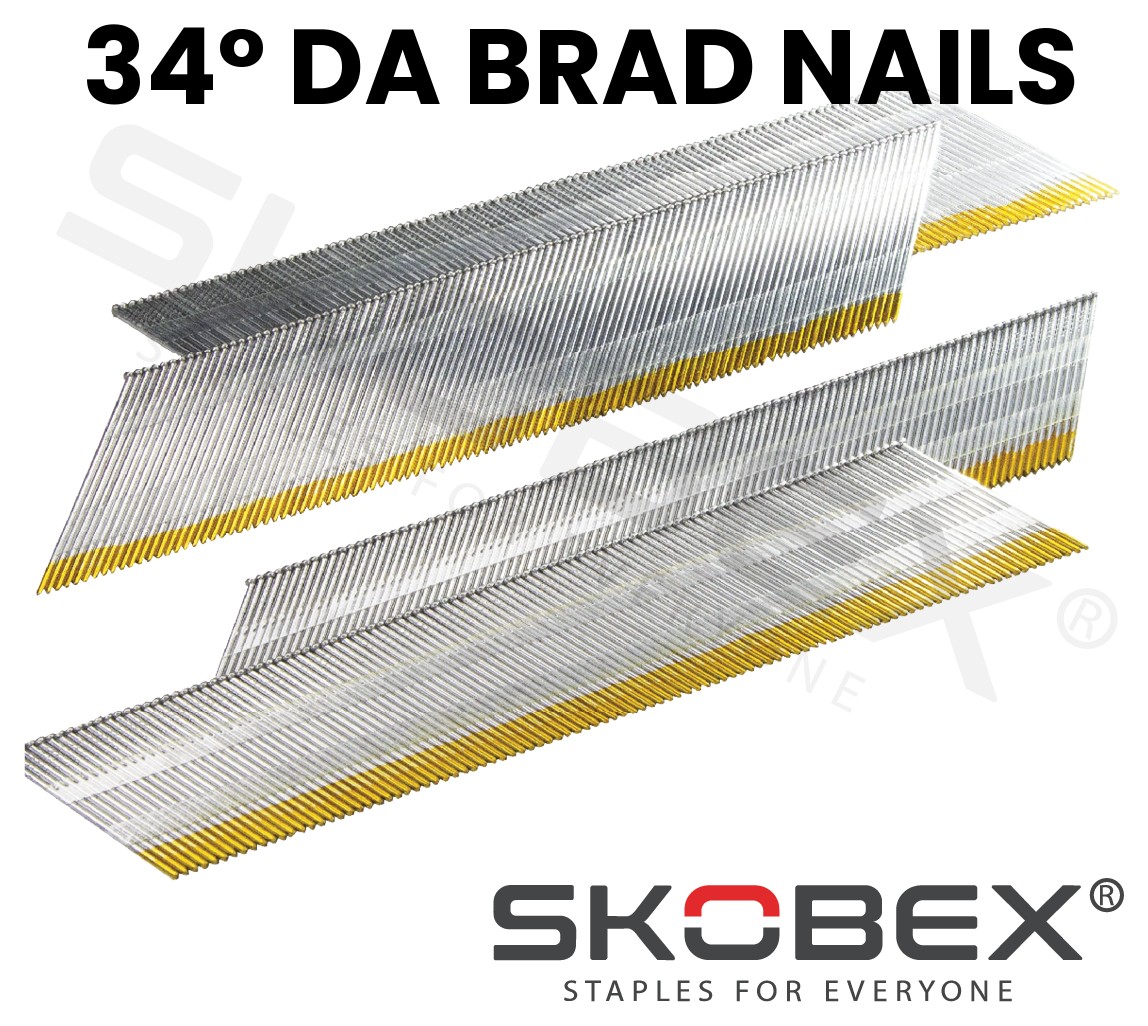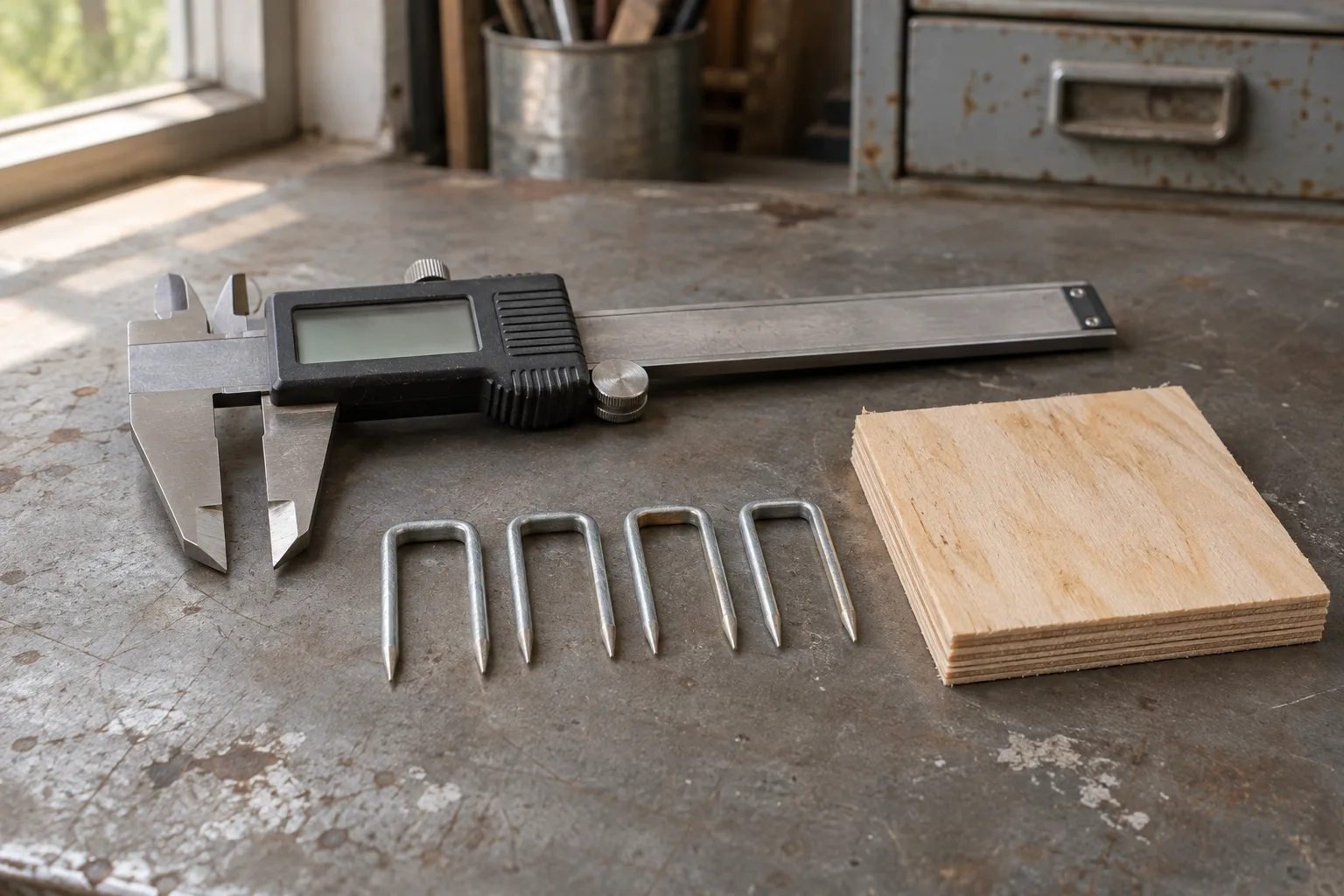
Compare Models 14, N, P, Q, GSW and 246 by crown, wire section and tool requirements before evaluating the actual joint.
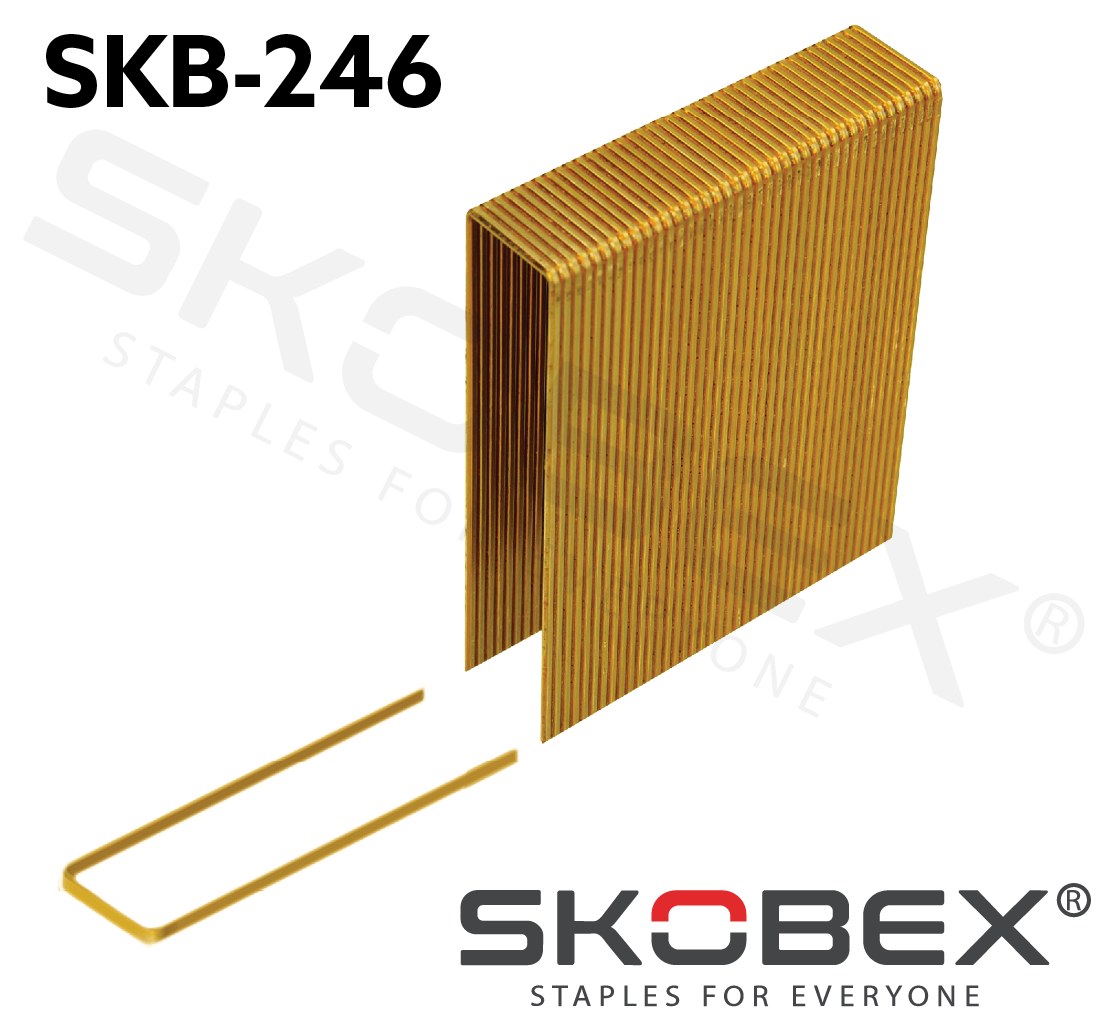
The heavy-wire category contains staples with different geometries. It is not a single standard product, and it does not mean that a longer fastener can be loaded into an existing tool. Separate two decisions: whether the fastener matches the tool specification, and whether the resulting connection meets the finished product’s requirements. A positive answer to the first question does not automatically answer the second.
A catalogue family is not an interchangeability list
The latest Skobex table lists 14, N, P, Q, GSW and 246 in the heavy-wire group. For example, crown widths are 10.50 mm for 14, 26.40 mm for P, 23.10 mm for GSW and 27.00 mm for 246. FSS is listed separately as flooring staples. Assess each code independently: a similar crown does not establish interchangeability.
Do not infer connection capacity from the category
Thicker wire and longer legs describe geometry, not a published strength rating for a particular joint. Substrate, material condition, connection layout and service conditions also belong in the assessment. For structural applications, use approved information appropriate to the design. This catalogue does not provide universal load values or permission to replace fasteners specified by the person responsible for the structure or finished product.
Read the length list precisely
The latest table gives Model 246 a 27.00 mm / 1.063 inch crown and 2.10 × 1.80 mm wire. It supplies no length list. State the required leg length and quantity in the enquiry; length labels in an older drawing do not confirm the current range or stock.
Connect the application to a real workpiece
The supplied table mentions furniture frames, wooden packaging, heavy upholstery and other uses. These descriptions identify possible candidates. They do not replace a description of the components, their thicknesses and the required result. A manufacturer’s fastener catalogue likewise distinguishes model geometries and tool matches. A length without context is not a complete purchasing specification.
Validate through a recorded trial
Evaluate the candidate with the intended tool and actual materials, following the manufacturer’s instructions. Record the product code, length, trial assembly and acceptance criteria. If the substrate or tool changes, identify what needs reassessment. This prevents one successful trial from turning into an unsupported rule for later operations with different materials, geometries or production requirements.
Begin with the heavy-wire catalogue and Model 246 if its dimensions match your search. A useful enquiry includes the tool, dimensions, workpiece and expected requirement. Availability and supply conditions for the exact variant must be confirmed separately; published dimensions identify the model rather than confirm stock.
Sources
- SENCO 2026 fastener catalogue — SENCO