Define the trial, use actual materials and record acceptance criteria. A practical sample-review process before a larger production order.

A sample trial is most useful when its question is clear before work begins. Are you checking tool feeding, joint appearance, damage to the materials or a specific technical property? A note saying only “accepted” leaves little information for a repeat order. A simple, consistent trial record preserves the reasons for the decision.
Define the question and acceptance criteria
Write down what an acceptable result will look like. An upholstery review may consider fabric condition and the visible fastening area; a carton trial may consider flap contact and the formed legs. If a technical test under a standard is required, identify the method and the person responsible for evaluating it. Keep different questions separate so that one successful observation is not mistaken for approval of everything.
Use actual materials and equipment
Reproduce the intended material combination and thickness. Record the tool manufacturer, model and applicable instructions, and prepare the equipment accordingly. Changing several variables at once makes the cause of a difference difficult to identify. Record adjustments in sequence so that the result remains understandable to someone who did not attend the trial.
Identify every sample
State the fastener model, length, wire, finish and available batch identification. For C-rings, add the relevant open and closed dimensions. For wire band, retain the band and coil specification. Take photographs of the feature used to make the decision, not just an overall view, and keep a clear sample number with each photograph.
Make measurements repeatable
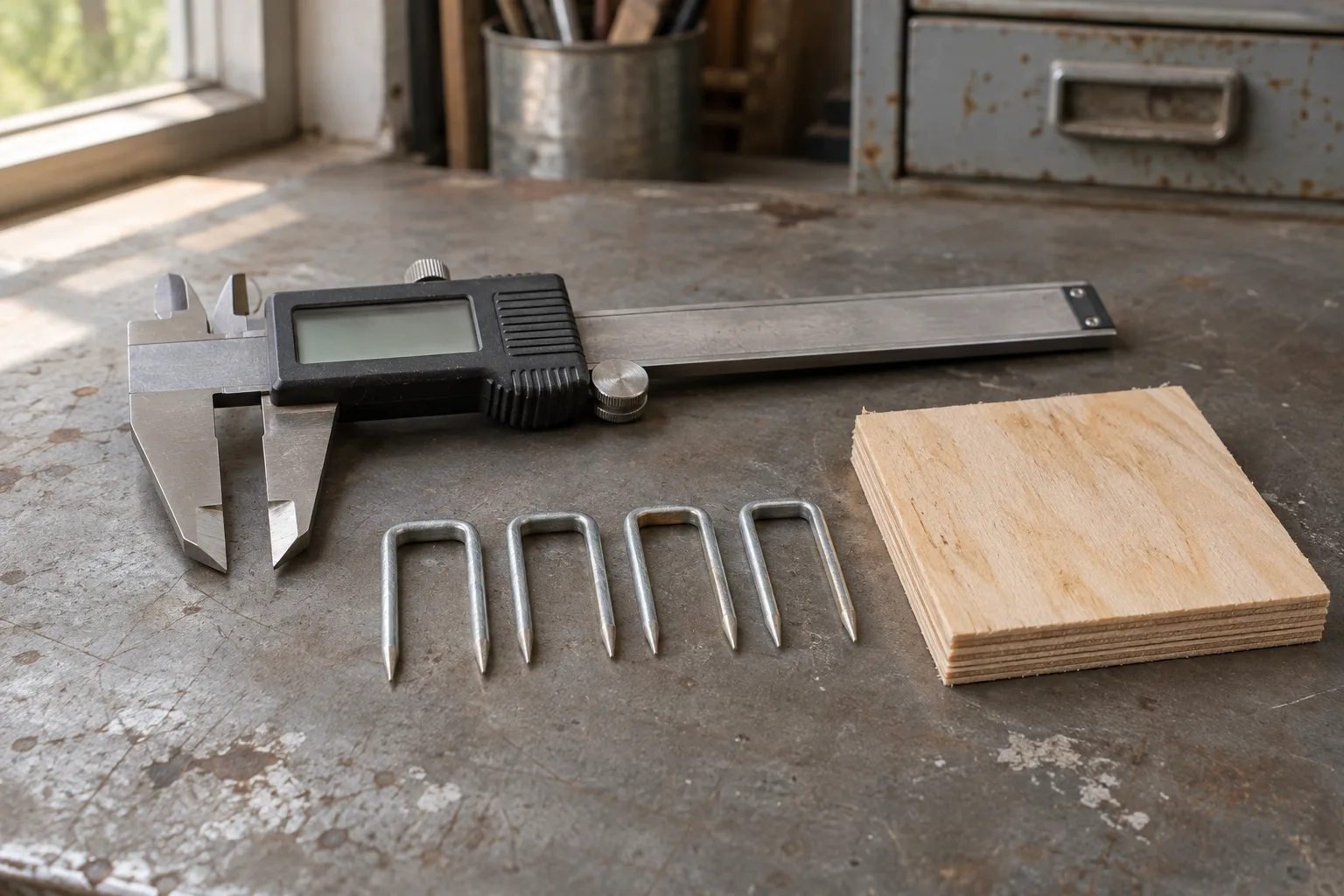
Agree measurement points, instruments and units when dimensions form part of the review. The NIST explanation of measurement traceability highlights the importance of a documented measurement process. Start the working record with a clear method; establish any formal measurement or reporting requirement separately when it is needed for the application.
Connect the decision to the order
Retain the date, materials, observations, photographs and outcome on the trial sheet. Identify anything not yet checked. Keep the accepted sample and specification for comparison with later deliveries. If the material, tool or fastener variant changes, consider whether the relevant part of the trial needs repeating rather than automatically carrying the old decision forward.
Separate confirmed data in BR12 and DA trials
Identify a BR12 sample by its exact length, wire and head. Start a DA trial only after confirming the missing length and the specific tool requirements against the supplied 1.76 × 1.76 mm wire: a 34° label alone is insufficient. For finishing work, record head position, visible surface and workpiece condition separately, and tie the result to the fastener variant actually evaluated.
Choose a starting model from the catalogue and send your sample requirement, explaining the question you want to resolve. That produces a focused trial and a useful purchasing record, rather than a collection of unlabelled fasteners and a result that cannot be reproduced.
Sources
- Metrological Traceability — NIST