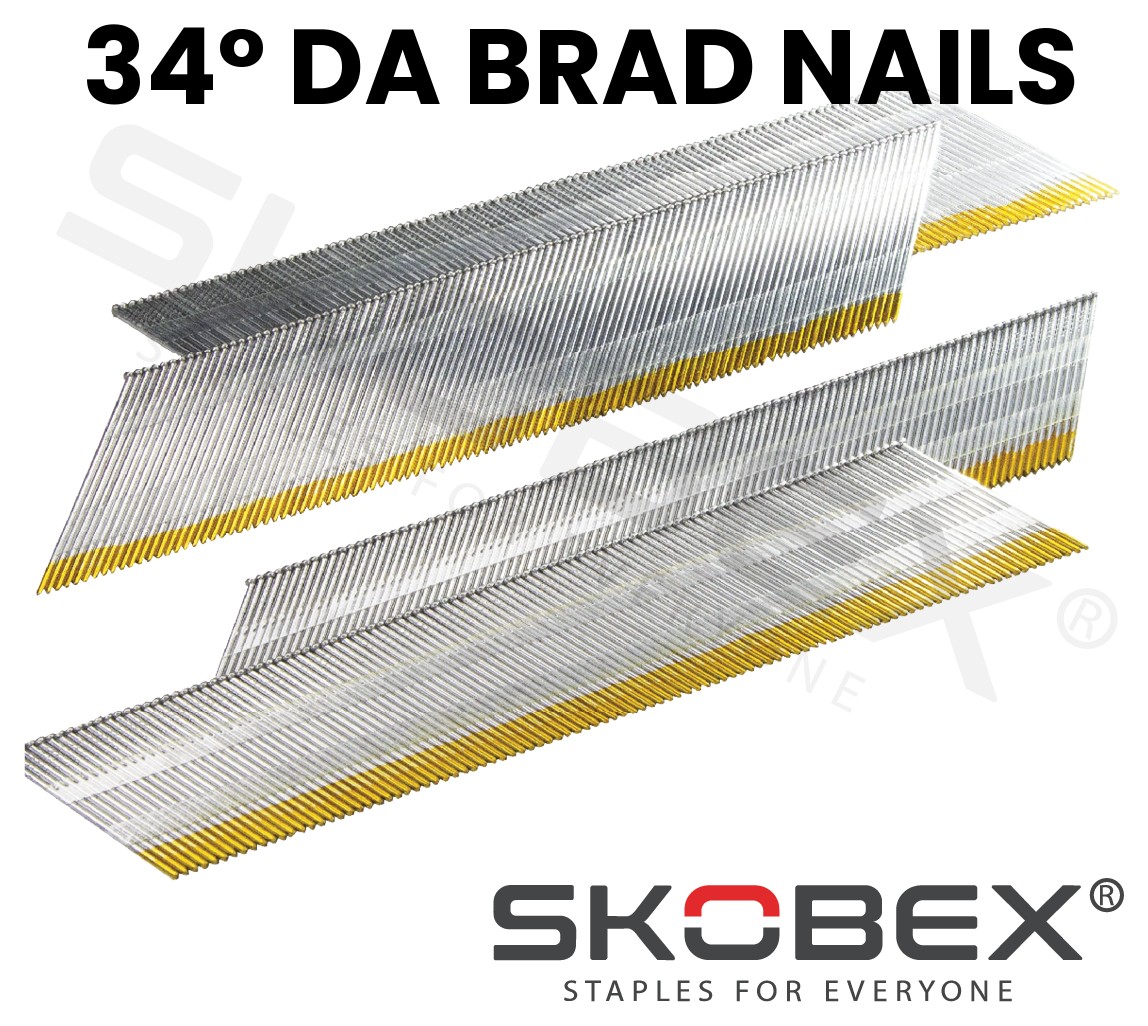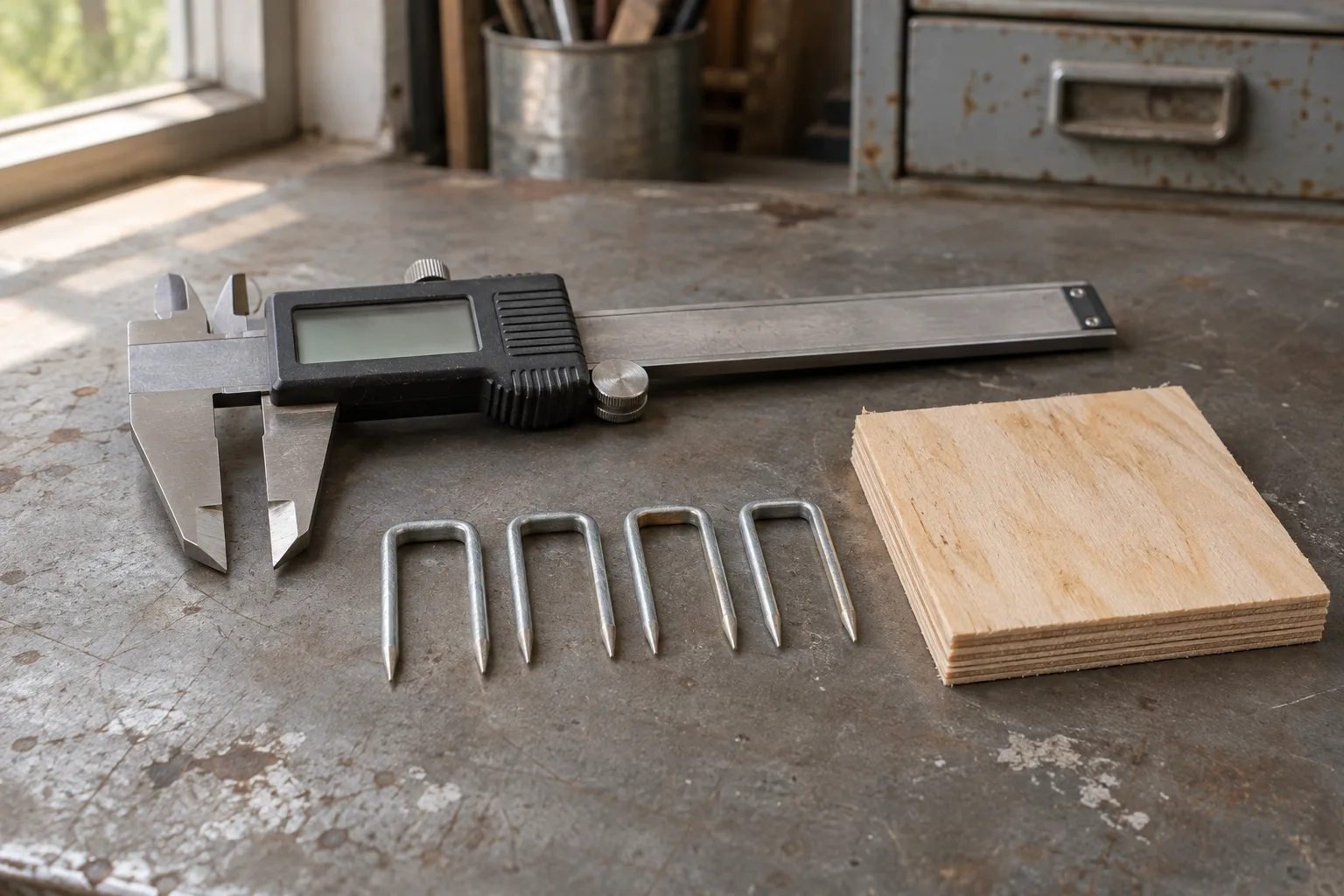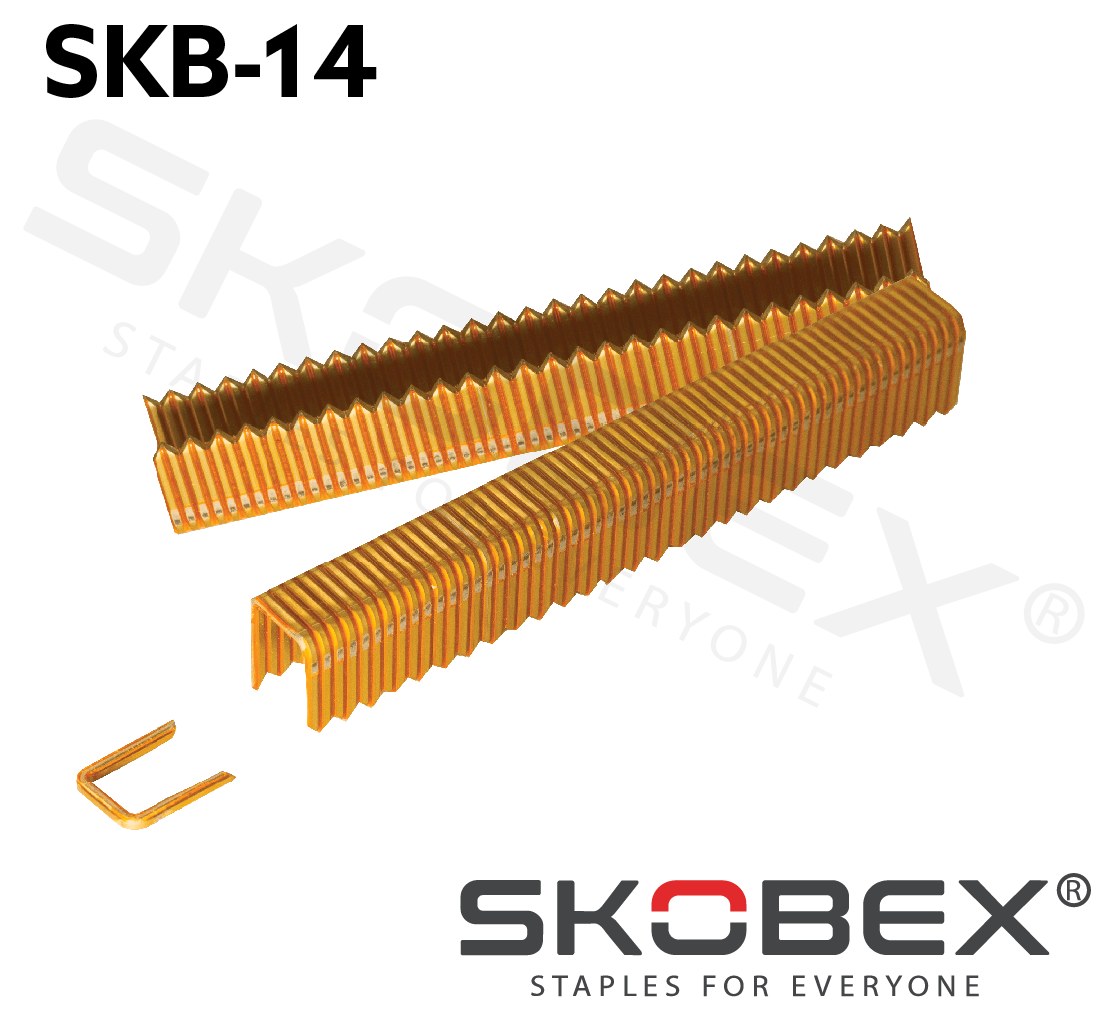
A cross-reference starts the search. Compare dimensions, length, tool requirements and a representative sample before changing fasteners.
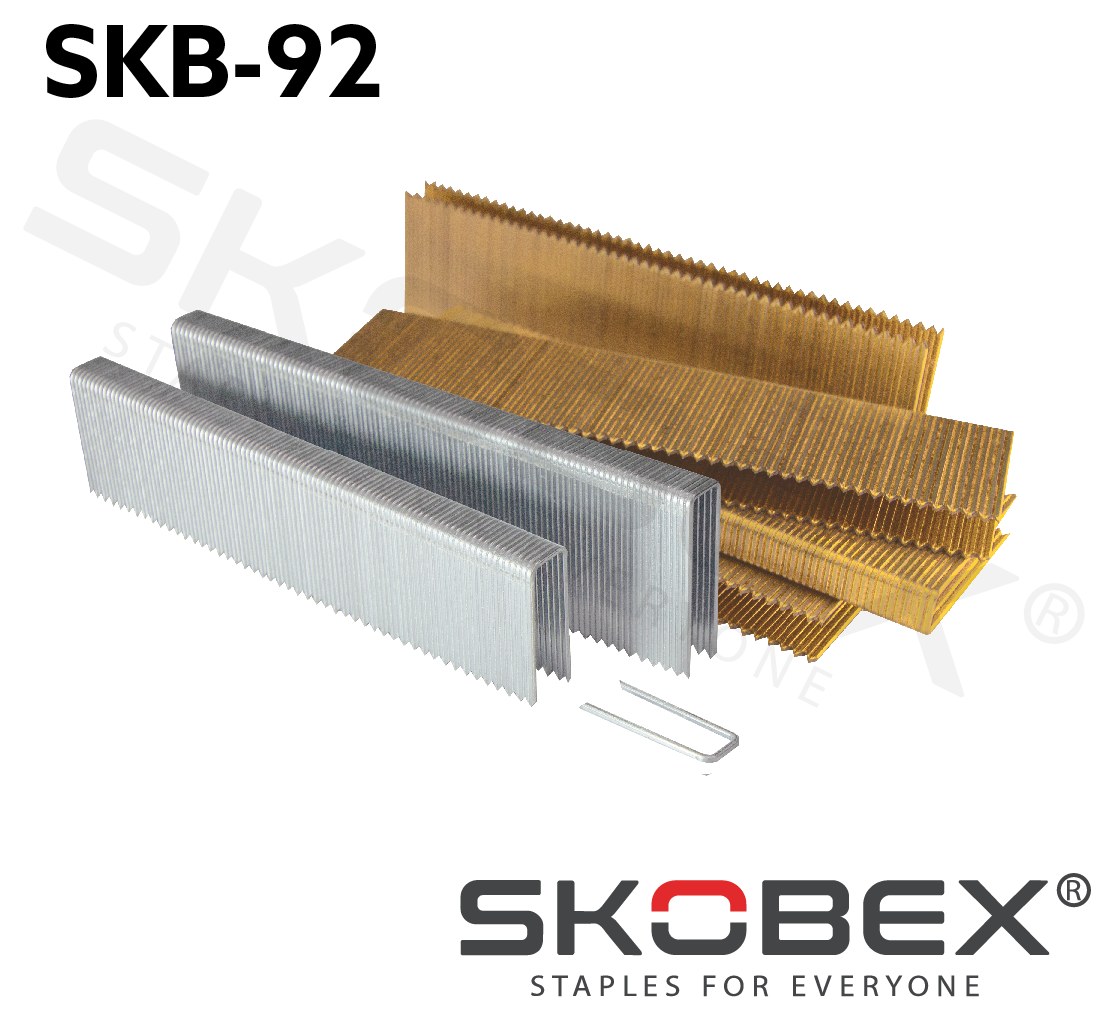
Different manufacturers may give quite different codes to similar fasteners. A cross-reference helps identify candidates, especially when the only starting point is an old package label. Before replacing an existing product, check the proposed alternative against a complete specification rather than treating the search result as the final decision.
Capture the complete label
Photograph the manufacturer, series, full product code and length. Record the tool model separately. A single letter or shortened series number may not distinguish the available lengths, points or finishes. Keep the original label information with the enquiry so that a candidate can be traced back to the product actually being used.
Compare dimensions consistently
For a U-shaped staple, compare crown width, both dimensions of the wire section and leg length. Then check the point, strip arrangement and required finish. The SENCO product catalogue illustrates why a series must be read alongside length and other fastener fields, rather than as a universal name.
Use the reference as a starting point
The latest Skobex table supplies no competing-brand equivalents. Search by the exact current Skobex code and use an older label only as a starting point for comparison. A matching number, wire category or angle does not establish compatibility with a particular tool; that correspondence requires a separate check.
Adapt the comparison to the family
C-rings require separate open and closed dimensions. L-cleats require the appropriate head profile and tool. Wire band requires its construction and supply format. A general cross-reference field should not hide those differences. Use the specification appropriate to the family, and include a drawing when a name does not clearly identify the relevant geometry.
Record the approved substitution
When changing suppliers, put the old and proposed codes in one comparison sheet. Identify the parameters already checked and those still needing clarification. Evaluate representative samples with the normal equipment and materials. After approval, record the selected product and specification in the purchasing system rather than keeping only the old manufacturer’s code.
This record is also useful at receiving: the new label can be checked against the agreed product instead of against a verbal description. If a later order changes a length or finish, update the specification instead of assuming that the previous cross-reference covers every version. Search the Skobex catalogue by code and send the old label and tool model for a focused comparison.
Sources
- 2026 Product Catalogue — SENCO