Fabric, leather, vinyl and wooden substrates: what to specify when assessing Models 71 and 380 for upholstery work.
In upholstery, the appearance of the material after fastening matters alongside the connection itself. Fabric, leather and vinyl do not respond identically to tension and local compression. Start fine-wire staple selection with the actual material combination and tool, rather than a length that happened to work on a previous piece of furniture. This guide helps define a useful trial; it is not a universal upholstery recipe.
Understand the catalogue candidates
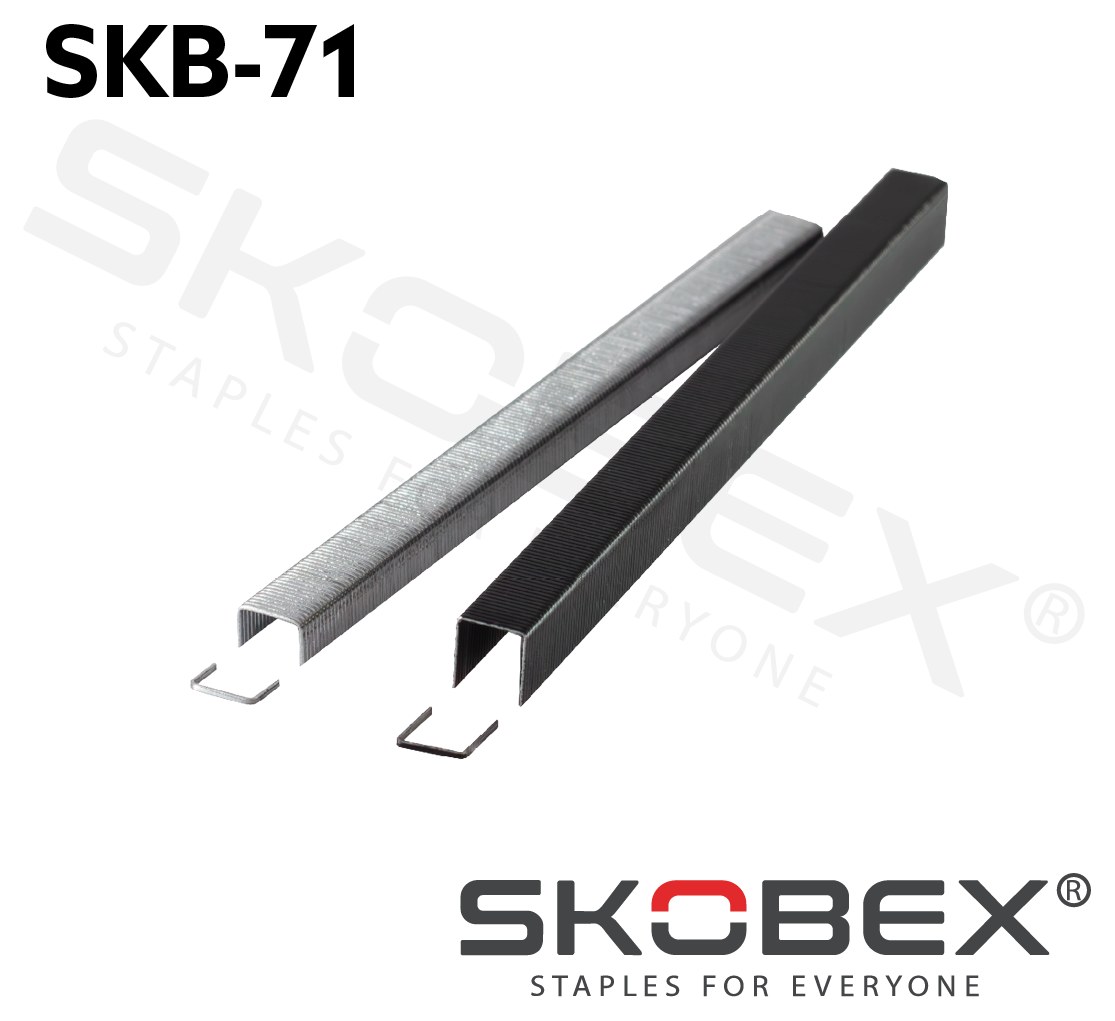
The supplied Skobex table lists Model 71 for fabric, leather and vinyl upholstery, while Model 380 includes upholstery and fabrics. These descriptions identify candidates. Tool specification, crown, wire section, point and selected length still determine which candidate should be evaluated for the actual operation.
Fine wire does not mean one interchangeable model
Model 71 has 0.75 × 0.60 mm wire and a 9 mm crown in the supplied table. Model 380 has 0.90 × 0.70 mm wire and a 12.8 mm crown. This illustrates why the label “fine wire” is insufficient for ordering. SENCO’s fine-wire product example provides wider application context, not a technical specification for these Skobex models.
Record the material stack
Include upholstery type, total layer thickness and substrate material on the trial sheet. Identify folds and areas where several layers overlap. If material arrives in different batches, retain the identity of the tested sample. That record makes it easier to repeat an assessment when the fabric or frame component changes, instead of guessing why a previously successful setup now gives a different result.
Inspect the surface and connection separately
On a representative production sample, examine compression, tearing, staple position and visibility. Distinguish areas that will be concealed from those that remain visible. Adjust the tool only in accordance with its instructions. A visually consistent surface does not establish suitability for every service condition; the furniture manufacturer needs acceptance criteria appropriate to the finished product and its intended use.
Turn the approved trial into an order
Once a candidate is accepted, record the exact model, length, required surface and material combination. Colour alone is not a coating specification. If the appearance of black or silver staples matters, agree it against a sample and carry that requirement into the order. Keep the approved label with the trial record so another buyer does not have to reconstruct the selection from memory.
Compare Model 71 and Model 380. Include the tool model, material description and proposed leg length in your enquiry. Where an existing fastener has worked well, its box label and an undamaged strip are more informative for identification than a general photograph of the finished chair or sofa.
Sources
- SENCO 2026 fastener catalogue — SENCO